
Unveil the Spiritual beauty of Temples in Mysore rich in history and Architectural splendor. A journey of peace and devotion awaits you
Temples in Mysore
Mysore is not only famous for its royal palaces but also for its ancient and beautiful temples. These temples reflect the city’s deep connection to Hindu culture, art, and spirituality. Some of these temples are over 1,000 years old and were built by kings and rulers of the Wodeyar dynasty and Chola Empire. They are visited by thousands of devotees and tourists every year.
Mysore is a city known for its royal charm, and its temples add a divine touch to its rich heritage. From the famous Chamundeshwari Temple atop Chamundi Hills to the ancient Someshwara and Trinesvaraswamy Temples near Mysore Palace, each shrine holds deep religious and historical significance. Many of these temples were built by the Wodeyar kings and the Cholas, showcasing beautiful Dravidian architecture, stone carvings, and peaceful courtyards.
Devotees and tourists visit these temples to seek blessings and admire the cultural beauty of Mysore. Important temples like the Prasanna Krishnaswamy and Bhuvaneshwari temples are located inside the palace grounds, while the iconic Nandi statue attracts visitors on the way to Chamundi Hills. Visiting these temples offers not just spiritual peace but also a glimpse into the royal and devotional past of Karnataka. Whether you’re a pilgrim or a traveler, temples in Mysore promise a soulful experience.
Below is a list of the most popular temples in Mysore, along with their history, timings, and highlights.
🛕 1. Mahabaleswara Chamundi hills Temple in Mysore
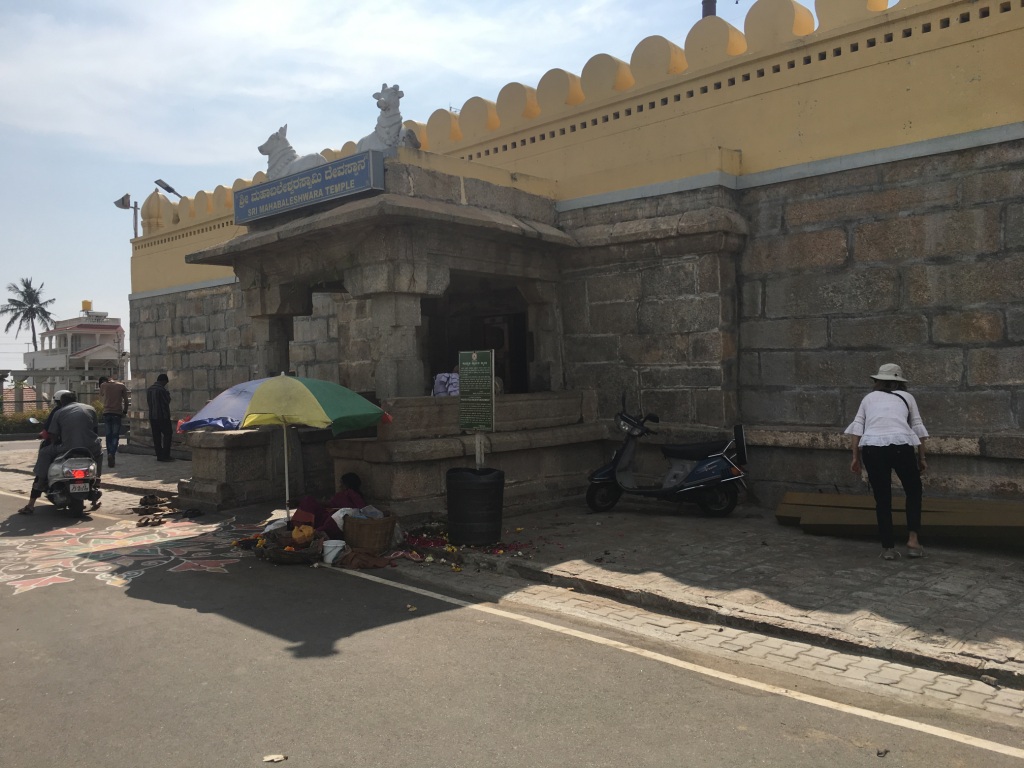
History:
Historically, Chamundi hill was earlier known as Marbbala Betta (Thirtha) or Maabala Betta because of an earlier temple situated on the hill next to the Chamundeswari Temple. The temple is dedicated to God Mahabala (one of the forms of God Shiva) and the hill was already a holy place even as early as 10th century.
It is said that the Hoysala king Vishnuvardhana had given funds for the maintenance of the temple and for the worship of the God. However later, when Mysore became a capital of the then Mysore state under Wodeyar rulers, the Chamundi temple started gaining importance.
It is said that Chamaraja Wodeyar IV one of the Kings who was in power was once struck by lightning when he visited the hill. Miraculously he survived, but lost his hair completely and became known as Bola Chamaraja Wodeyar (Chamaraja Wodeyar – the Bald).
This place is located in chamundheswari temple, Chamundi hills Mysore
🛕 1. Chamundeshwari Temple in Mysore
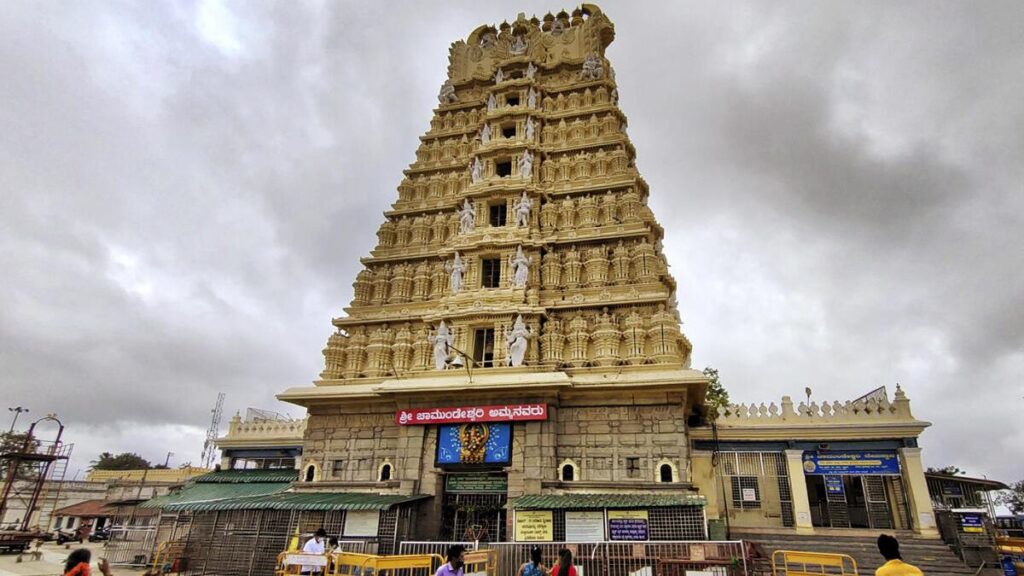
He was convinced that his life was saved by the grace of the Goddess and so the ruler adopted the Goddess as the family deity and so he and later his successors started improving the temple and thus the hill became known as Chamundi Hill.
the original temple the present Chamundi Temple is built in Dravidian style and is fairly large. Periodical improvements have been made from time to time by the later rulers of Mysore. The present seven-storied tower (Gopura) at the main entrance was got constructed by Krishnaraja Wodeyar III who ruled the Mysore from 1799-1831. There is also an equally ancient holy pond called Devikere, very close to the temple.
Highlights:
Timings:
- Morning: 7:30 AM – 2:00 PM
- Afternoon Break
- Evening: 3:30 PM – 6:00 PM
- Night: 7:30 PM – 9:00 PM
🛕 2. Sri Nandi Temple (Bull Temple) in Mysore
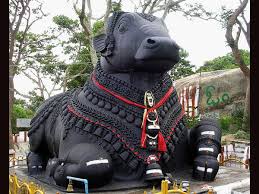
History:
Located on Chamundi Hill’s path, the Nandi Temple is dedicated to the bull of Lord Shiva. It is believed to be more than 350 years old and carved from a single rock.
About 16 feet in height and 24 feet long, this Nandi atop the Chamundi Hills is the third largest in India. The creation of this colossal image is attributed to Dodda Devaraja Wodeyar (1659–1673) on of the illustrious Maharajas of Mysore. It is the same maharaja who also commissioned the 1000 stepped stairway to the hilltop.
Highlights:
- 16-foot tall Nandi statue
- Peaceful surroundings
- Stopover while visiting Chamundi Temple
Timings:
- 6:00 AM – 8:00 PM
🛕 3. Lakshmiramana Swamy Temple in Mysore
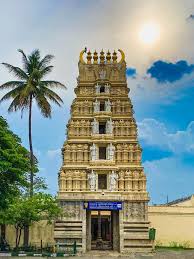
History:
The Lakshmiramana Swamy temple in Mysore is one of the oldest temples in the city. In an inscription found at the Banni Mantapa in Mysore there is a mention of a grant for God Lakshminarayana in 1499 by the Vijayanagara King Narasa Nayaka, the father of the famous Vijayanagar emperor Krishnadevaraya.
There is an inscription in the temple dated November 30, 1851, recording that Krishnaraja Wodeyar III renovated the tower built over the Mahaswara (the main entrance) Raja Wodeyar built the original tower.There is a statue of Raja Wodeyar to the right side in the Prakara that is about 2 feet in height.
The main deity of the temple is Nambinarayana, a form of Vishnu, the sanctum sanctorum has a statue of Him holding the discus and the conch. There is a cell to the right that has a statue of his consort, the Goddess Lakshmi.
There is a beautiful statue of Lord Venugopala that is about 4 feet. Kantirava Narasaraja Wodeyar (1638-1659) built the magnificent mantapa in the rear of the temple.
The temple was the venue for the coronation of the five-year-old-child Krishnaraja Wodeyar III. As there was no other place that was suitable enough for the coronation, the British placed the child King on the throne of Mysore in this temple on June 30, 1799, after the death of Tippu Sultan.
The temple is located on the western part of the fort inside the Palace near the Residential Museum.
Thee are two interesting incidents associated with this famous temple. According to legend, a chieftain of Karugahalli was defeated at the hands of Raja Wodeya and wanted revenge. Therefore he bribed the priest of the temple to offer the King poison mixed with holy water (thirtha), when he came to the temple to offer daily prayers.
While doing so the priest’s hands trembled. And on being questioned by the King the priest confessed that he had poisoned the holy water. Raja Wodeyar drank that water and it had no effect on him as a result of his faith in Lord Lakshminarayana.
The priest was transferred to a different temple and the Karugahalli chief was defeated, his fort destroyed and all his wealth was used as an offering to Goddess Chamundeshwari.
Raja Wodeyar built the Mahadwara with a tall gopura and decorated it with golden finials, as an offering to the Lord for saving his life.
In the second incident a half-blind Brahmin was cured of his blindness around 1599 at the interposition of Raja Wodeyar.
To commemorate this miracle the Maharaja installed a two feet statue of himself standing with folded hands in the temple.
This temple is located in amba vilas palace in mysore
Highlights:
- Stone carvings and peaceful surroundings
- Located near Mysore Palace
Timings:
- Morning: 6:00 AM – 11:00 AM
- Evening: 5:00 PM – 8:00 PM
🛕 4. Prasanna Krishnaswamy Temple in Mysore
History:
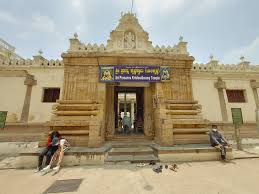
Krishnaraja Wodeyar III built the Prasanna Krishnaswamy temple. This temple is dedicated to Lord Krishna the founder of the Yadu dynasty. Construction of temple began 1825 and was completed in 1829. He presented the temple with about 40 bronze statues of Gods, Goddesses and saints. His name was inscribed next to the name of the statue. There is a statue of Krishnaraja Wodeyar III along with his wives with labels on their pedestals. The statue of the Maharaja is also worshipped.
This temple is located in amba vilas palace in mysore
Highlights:
- 40 idols of Hindu deities
- Traditional South Indian architecture
- Calm and less crowded
Timings:
- Morning: 6:30 AM – 12:00 PM
- Evening: 4:00 PM – 8:00 PM
🛕 5. Trinesvaraswamy Temple in Mysore
History:
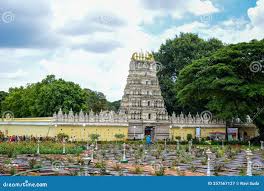
Trinesvaraswamy Temple is one among the oldest sanctuaries in Mysore which has rich social, religious and verifiable importance. Trinesvaraswamy Temple is accepted to be over 450 years of age as it existed notwithstanding amid the rule of Raja Wodeyar (1578-1617).
The sanctuary, in its underlying days was situated outside the Mysore Fort or Mysore Palace, on the bank of the Devaraya Sagar or Doddakere, confronting the fortification. At the point when the Mysore Fort was broadened amid the rule of Kanthirava Narasaraja Wodeyar (1638-1659) and his successor Dodda Devaraja Wodeyar (1659-1672), Trinesvaraswamy Temple went in close vicinity to the Palace complex.
This temple is located in near Amba vilasa palace Mysore
Highlights:
- Special pujas during Shivaratri
- Part of the palace’s spiritual circle
Timings:
- Morning: 6:00 AM – 1:00 PM
- Evening: 4:00 PM – 9:00 PM
🛕 6. Someshwara Temple in Mysore
History:
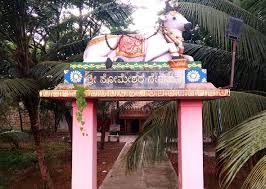
This temple was originally built during the Chola dynasty and later renovated by Wodeyars. It is dedicated to Lord Shiva and located in the heart of the city.
This temple is located in Amba Vilasa Palace in Mysore
Highlights:
- Peaceful temple in the city
- Popular with locals for daily worship
Timings:
- Morning: 7:00 AM – 12:30 PM
- Evening: 4:30 PM – 8:00 PM
🛕 7. Bhuvaneshwari Temple in Mysore
History:
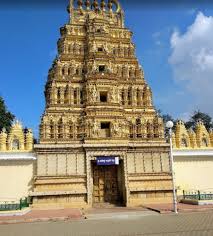
Built in 1951 by Jayachamaraja Wodeyar, this temple is located inside the palace premises and is dedicated to Goddess Bhuvaneshwari.
This temple is located inside the Amba Vilasa palace in Mysore
Highlights:
- Carved from pure granite
- Less crowded and very peaceful
- Offers spiritual retreat inside Palace
Timings:
- Morning: 6:30 AM – 11:30 AM
- Evening: 4:30 PM – 8:30 PM
🙏 Conclusion: Explore the Divine Side Temples of Mysore
Temples in Mysore are more than just religious places—they are a part of the city’s cultural and royal history. Each temple offers a peaceful atmosphere, unique architecture, and a story that takes us back in time. Whether you are a devotee or a traveler seeking serenity, these temples will add spiritual value to your Mysore visit.